
I periodically poke around for new signs of interest in the Nintendo Dsi among U.S. teachers. We know about the DS Classroom initiative in Japan, but apart from one or two pioneers we’ve heard from, there have been few signs that teachers are experimenting with the DS out there in the U.S. (if you are, we’d love to hear from you!).
What I did find today (at the lovely Ning network Classroom 2.0) was a handful of teachers in Australia who have gotten sets of iPod Touches. What is it about Australia that makes those teachers so often early adopters - the geography and the familiarity with distance learning maybe? Anyway, it was striking to me that these teachers were asking many of the same questions teachers asked 20 years ago about desktop computers - in a nutshell, “I’ve got this hardware, it seems great - any ideas about how I should use it?” Teachers did share pointers to reading and math practice games, a classroom management system, and so on - but no one seemed to have started from an instructional or curricular need, or even from a vision for organizing their classroom - instead, they’re starting from the hardware.
This should come as no surprise, I suppose, as it’s exactly what happened with desktop computers for classroom use. But it’s worrying. We know that many teachers are likely to be resistant to the idea of students using Nintendo machines in the classroom. We need to be sure we always lead with the instructional need we’re addressing - from a teacher perspective, the hardware should be incidental. What matters is whether the tool helps address a need that they recognize in their own students.
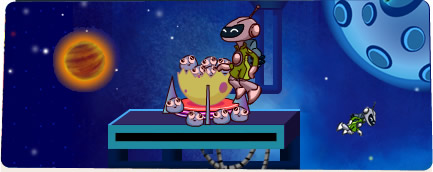
In preparation for our Fall 2009 formative research, the game production team has been developing prototype iterations for four games: a photosynthesis “shooter”, a systems game, a literacy game and a classroom game. The photosynthesis game has moved on to DS platform, while the other three are still in GameMaker or paper development.
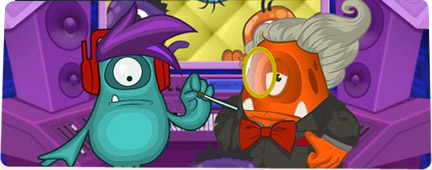
In addition to game development, we now have a draft treatment for a narrative that will eventually tie together all four planned modules, associated mini-games and classroom activities. The treatment describes the setting, characters, and drama of a fictional adventure of a group of young teenagers as they explore a subterranean world.
At this time Module 1 consists of the following four games:
- The Photosynthesis “Shooter”
The major purpose of this game is to give students an opportunity to DO photosynthesis without initially being aware of it. The idea is to have them think critically about the rules of the game. They can do this because it is a familiar mechanic, one they have probably experienced in other games, but here they have to determine exactly which variations this game embodies by trying out different strategies and reflecting on how they work in the game universe.
An additional level is being planned where players can explore a mechanical version of photosynthesis in a solar (or photovoltaic) cell. The same shooter mechanic can serve as a way for players to enact a mechanical version of energy transformation. This level also serves as a bridge to the next mini-game.
Continue Reading 
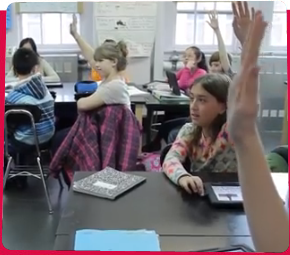
EDC/CCT recognizes that the only way to create educational games that are both compelling for students and useful for teachers is to involve teachers and students in the game development. So as we develop the Possible Worlds game modules, we are using a formative research process in which our team works closely with teachers and students in after-school programs to determine whether the game activities and narratives we design are both engaging and educationally substantive. This formative research will also help us understand what we will need to include in the teacher professional development and support materials for teachers to be able to implement these games into classroom instruction.
Our Research Questions
The six key research questions we want to answer through our formative work in the after-school programs with teachers and students are the following:
- Are the Possible Worlds modules engaging to students? If not, how can we make them more engaging?
- Do students who play the Possible Worlds modules understand the key science concepts addressed in the modules?
- Do the Possible Worlds modules help students that teachers identify as “struggling readers” engage in the science content as fully as students who read at grade level? Continue Reading